
Drones have the capability to be amazing and completely change humanity for the better, but as with all technology, people can decide to use them for evil. For instance, what is to keep someone from dropping a drone carried bomb on a building or in a crowd in the middle of a big city? As a result, many companies and governments have been working to develop counter-drone technology over the last decade or so. Whether it’s something as primitive as shooting the drone with a net or as advanced as firing a laser, this technology has become very advanced.
These technologies are mostly used for war and for counter terrorism. All of the different methods have positives and negatives, which I will compare below.
There are three main categories of counter-drone technology: 1) kinetic, 2)destructive energy, and 3) hijacking.
Quickly before I start, I want to warn you that some of these methods may be illegal in certain reigons so if you want to try/use any of these methods to knock drones out of the sky, make sure to check your local laws first.
Kinetic
Kinetic anti-drone technology refers to anything that physically takes the drone out of the air using some sort of object typically fired at great speeds.
1. Surface to air cannons/missiles
This method was most popular around a decade ago, when drone technology was still a relatively new development, and there was not much that was specifically made to protect against drones. The same cannons and missiles were being used to shoot down drones and classic fighter jets. These days, it is still a common, and I’ll admit, fairly effective way to stop a drone that could have malicious intent from harming people. Some pros are that guns and cannons, and even some missiles, are very easy to get. Additionally, you can use this method to stop almost any drone. Some cons to this tech are that first, it is hard to hit a fast-moving drone, even with a missile. Second, you have to have a line of fire and be fairly close to the drone. Third, often the missiles and bullets cost more than the drone you are killing so you end up losing money.
CIWS stands for Close-In Weapon System, which describes systems of guns that fire at a rapid speed. These are basically machine guns and often found on ships or land-based targets that need protection. CIWS fire hundreds of rounds at an incoming drone. They can be paired with radar or AI to identify and lock-on to incoming drones. Unfortunately, it often takes hundreds of rounds to take down a single drone and each CIWS typically only has 1500 rounds, not nearly enough to take out a full swarm of 100-200 drones.
2. Nets
This is a seemingly simple and primitive way to deal with drones, but whether you are covering tanks and roads with fishing nets like in Ukraine, or making drones to shoot nets at other drones and immobilize them, nets are definitely becoming a viable option to protect from drones. Nets can also be shot from ground-based based shoulder-mounted cannons. Some pros are that it is very cheap and easily scalable, and that, for now, if you are able to get a net on a drone, that drone is almost definitely going to crash. Some cons are that first, with the right tools, it is very easy to get through the nets. And second, it is very hard to actually get a net around a drone — you need to find the drone and then hunt it down and get close enough to net it.
Destructive Energy
Destructive energy uses some form of… well, destructive energy, as the name suggests, to fry the circuits inside of the drone and basically render it useless.
3. Microwave cannon
I have talked about this type of anti-drone mechanism recently here in a previous post, but not very much in depth. There is an American company that has made a device that shoots microwaves at a swarm of drones. The microwaves fry the circuitry in the drones, and in most cases, the drones fall out of the sky. The machine is called the Leonidas High-Powered Microwave and is made by the company Epirus. Some positives are that it is very easy to get rid of a whole drone swarm and that it and its other versions are very easily moved to almost anywhere, whether it be on a land vehicle, another drone, or basically anything else. The only main flaw so far is that it is ridiculously expensive at the moment. The exact price is not known, but the US Army awarded them a $43 million contract earlier this year for two of their Gen II models.
4. Lasers
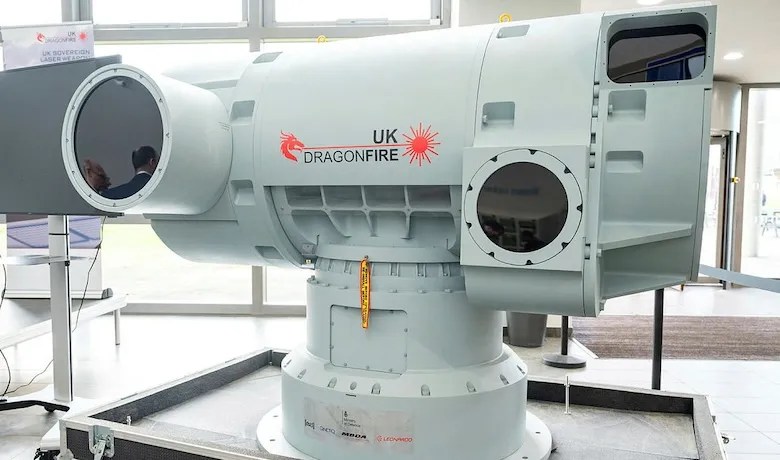
A couple of companies are working on some experimental anti-drone lasers. These machines shoot incredibly high powered beams of light to overheat a drone. As I said, there are many companies that are working on making a working anti-drone laser, but only a few have actually so far been successful in stopping a drone in the tests. Some examples are Lockheed Martin’s ATHENA, Raytheon’s HELWS, The Australian Military’s Apollo, and The UK’s Dragonfire to name a few. Some pros to the lasers would be that they can continuously fire as long as you have power, and that they have laser precision (maybe because they are lasers.) One main con is that they are almost all prototypes so far and are not available for government/army use yet.
Hijacking
Hijacking is any method that jams or takes control of the drone by tapping into or blocking out the signal sent by the actual pilot.
5. Radio interference
Most drones are controlled through radio waves. People have figured out how to exploit this to cut off the drone from the user or even control the drone themselves. If you send a lot of random radio waves on the frequency the drone uses, you will essentially drown out the communication between the drone and the originally intended pilot. This same concept can, in some cases, be used to take control of the drone rather than just blocking the pilot. If you are able to replicate the pilot’s signal and make a more powerful radio wave so that yours is easier to detect than the actual pilot’s, you can control somebody’s drone. Some pros are that this can be done on a massive scale and is very easy to replicate. A con is that some drones, including fiber optic drones being used by Russia and Ukraine, have become immune to this tactic, which can make it completely useless in some cases. The drone is not controlled by electronic signals but rather at the end of a long fiber optic cable that reaches back to the controller. There are even Chinese companies, such as Fireblade, that are mass producing fiber optic drones with up to a 50 km range for very cheap. You can buy these on the internet and basically have a machine with insane destructive capability that is difficult to stop.
I think that in the end, it is just one big cat and mouse. The drones get better, the methods to block them get better, and it goes on and on. If one side falls behind, the other side gains the upper hand.
I had a lot of help from this article to make this post so check it out as well.

Leave a comment